About DOAP
We take unexplained experiences seriously, and we test them honestly
Darkstar Occult And Paranormal (DOAP) is a Kolkata-based team of investigators, engineers and researchers. Since 2023 we have helped families and individuals make sense of experiences they can't explain, using measurement instead of fear.
Our mission
A superstition-free, knowledge-driven India
We treat claims of the paranormal as things that can be observed, measured and tested. We replace belief with measurement, story with data, and fear with method.
That matters most to the people we work with: a worried family, someone who can't sleep in their own home, or a person whose intuitive experiences have suddenly opened up. They deserve calm, honest help, not drama.
How we work
Five principles behind every case
- 1
Natural explanations first
We check wiring, damp, sound, light, health and sleep before anything else.
- 2
Measure, don't guess
Calibrated instruments, baselines and time-synced logs, not gut feeling.
- 3
Consent and privacy
Your details stay private. Nothing is published without written consent.
- 4
No rituals, no fear
We don't perform religious rituals, and we never use fear to sell a service.
- 5
Honest reporting
We tell you what we found, including when the answer is ordinary.
Anomaly research
Fixing the measurement problem first
Research into unexplained events has a long history of evidence nobody can check: readings without baselines, instruments without calibration records, footage without timestamps, and conclusions made at the moment of capture. We treat that as a data problem before anything else, and we build our own instruments to solve it.
Hydra
An instrument, not an answer
Hydra is our field-recording instrument: sensor rigs that continuously record the magnetic, motion and environmental conditions in a space, and the software that stores and analyses everything they capture.
Most equipment sold for investigating the unexplained is built to react. A light blinks or a needle jumps, and the person holding it decides something happened. Hydra works the other way round. It records first, keeps every reading with its time and conditions, and leaves interpretation to a separate step that can never change the original record.
It records, it doesn't react
The rigs capture what is physically happening, continuously, and never decide what a reading means.
Recording stays separate from interpretation
Analysis reads the record afterwards and cannot alter it, so any conclusion can be re-run or challenged.
Corroboration makes an event real
One sensor moving is noise. Several different sensors moving together, each against its own baseline, is a measurement.
Recordings stay with us
Hydra runs entirely on our own hardware. Nothing is uploaded to a cloud service or seen by a third party.
Our anomaly detection rigs
- In use
Magnetic and environmental rig
Four magnetometers of different types watch the same space, chosen so that they fail in different ways. A magnetic event is recorded only when all four move together, each against its own baseline. Motion sensing rules out the rig being knocked, and temperature, humidity and pressure sensing rules out ordinary environmental causes.
- Field testing
Audio rig
Records continuous sound through the same recording and analysis path, so audio can be lined up against everything else the rigs capture.
Where it's going
Today Hydra covers the magnetic and environmental band, a narrow slice of what there is to measure. We are extending it step by step up the electromagnetic spectrum, with the same detection method throughout.
In use
Magnetic and environmental
Next
Low-frequency induction sensing
Planned
Radio bands
Later
Microwave and above
Everything beyond the magnetic band is designed and planned, not yet built.
What we've learned
What the research has taught us
- 1
One sensor is easy to fool
A phone in a pocket, a passing car, a fridge compressor in the next room or simple temperature drift can all produce a convincing spike. Only agreement between different kinds of sensor is worth taking seriously.
- 2
The instrument is a suspect too
A knock or a bump looks just like a change in the field. Recording motion alongside everything else lets us rule that out automatically.
- 3
Every sensor needs its own baseline
Temperature and pressure drift over minutes; magnetic readings change in seconds. A fair comparison respects how each one normally behaves, and an instrument must sit still long enough to learn a space. A reading taken while walking through a room means nothing.
- 4
Weak evidence usually fails on data, not on the subject
Readings without baselines, calibration or timestamps can't be checked by anyone. Getting the record right comes before any claim about what it shows.
What Hydra doesn't do
Hydra doesn't tell us what caused anything. It tells us, reliably, that something physical changed, by how much and when, with the surrounding conditions attached. Explaining that is human judgement, made afterwards and in the open, so a sceptic can examine the same record and reach their own conclusion.
The team
The people behind DOAP
Engineers and researchers from software, network systems, 3D visualisation and evidence handling. Our common ground is method, instruments and transparency.
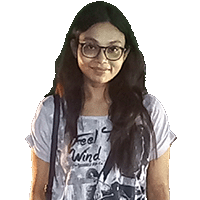
Ria Santra
Founder and Director of Operations
A network engineer turned 3D artist, Ria leads operations, field logistics, case triage and evidence documentation, and keeps every case to protocol.
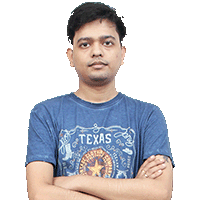
Pritam Samadder
Co-founder and Research Head
A software engineer and game developer, Pritam leads method design, instruments and analysis, and is the author of the Darkstar Recursive Field Framework.
Timeline
Our story so far
2023
DOAP founded in Kolkata. Casework focused on documenting claims and separating natural explanations from what remains.
2024
Shift to a research-first approach. Internal tools and protocols drafted. Public education and anti-superstition work expanded.
2025
Darkstar Recursive Field Framework published. In-house instruments and evidence standards introduced.
2026
Building a wider field network and a dedicated methods lab.
Requiem
Witch-hunting still costs lives in India. Our memorial records the victims from published reports, so they are not forgotten.
Ready to talk it through?
Tell us what's happening. The first call is free, and everything you share stays confidential.